


Ever thought about tackling a DIY electrical project? It might sound daunting, but with a little courage and the right guidance, it can be electrifyingly fun! Imagine transforming your home with custom lighting or wiring up that fancy new gadget you’ve been eyeing. Not only will you save some cash, but you’ll also impress your friends with your newfound skills.
Understanding DIY Electrical Projects
DIY electrical projects encompass various tasks, ranging from simple repairs to intricate installations. Undertaking these projects allows individuals to enhance the functionality and aesthetics of their homes. Safety remains paramount, making it crucial for those engaging in DIY electrical work to understand local codes and regulations. Familiarity with essential tools, including wire strippers, multimeters, and screwdrivers, contributes to project success.
Common projects include replacing light fixtures, installing ceiling fans, or adding wall outlets. Each task provides an opportunity to develop skills while improving the living environment. Involvement in these activities fosters a deeper understanding of how electrical systems function.
It’s beneficial to start with projects that match one’s skill level, progressively tackling more complex tasks. Online resources, such as video tutorials and detailed guides, offer valuable insights and step-by-step instructions. Various forums provide platforms for advice and community support, allowing DIY enthusiasts to share experiences and tips.
Budgeting plays a vital role in planning DIY electrical projects. Thick wires or energy-efficient bulbs may entail higher upfront costs, but they yield savings in the long run. Heeding safety precautions, such as turning off breakers and using insulated tools, prevents accidents during work.
Community workshops often host classes on basic electrical skills, helping individuals gain confidence before undertaking personal projects. The satisfaction of completing DIY electrical tasks generates a sense of achievement, exemplifying personal growth and skill acquisition.
Safety Precautions for DIY Electrical Work
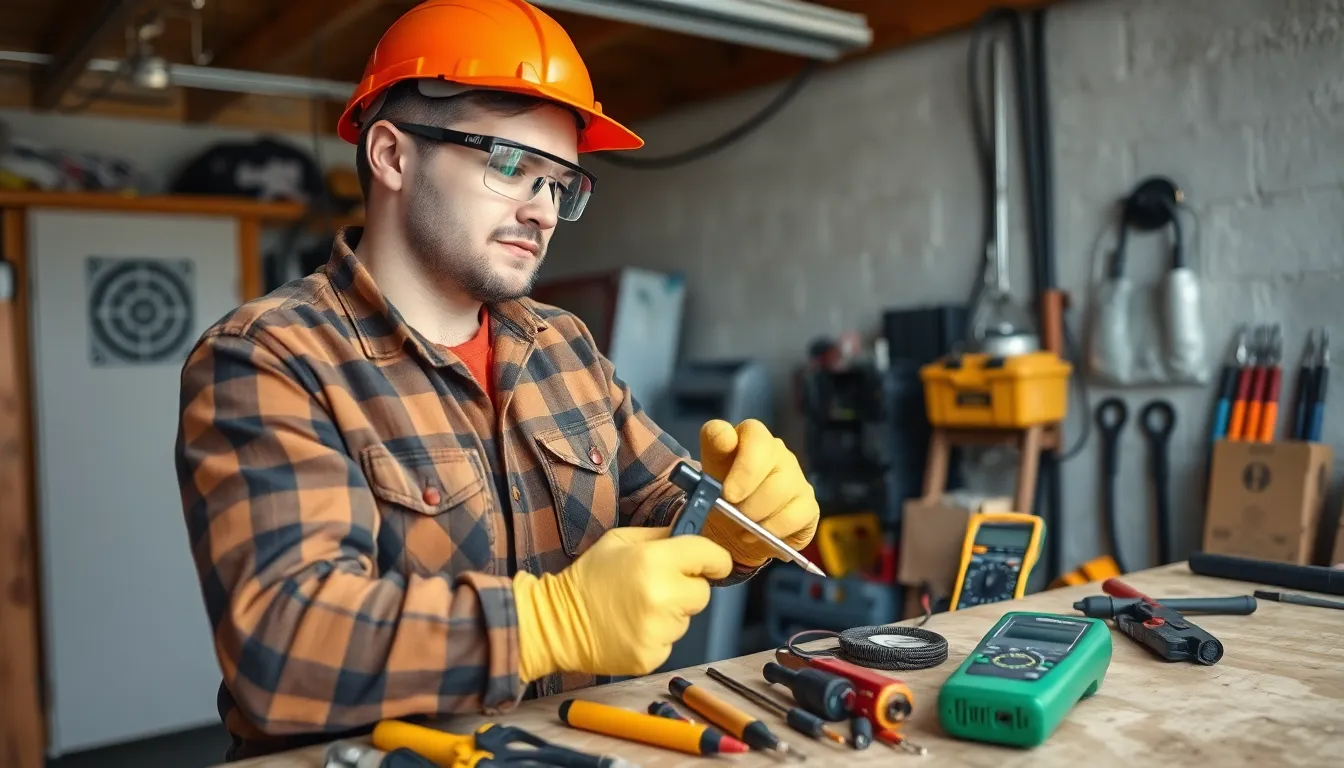
Safety remains a top priority for anyone engaged in DIY electrical projects. Adhering to specific precautions minimizes risks and ensures a smooth, successful experience.
Essential Safety Gear
Using proper safety gear safeguards against potential hazards. Safety goggles protect eyes from debris, while gloves prevent electrical shocks. Non-slip shoes provide traction on various surfaces, reducing the risk of accidents. Hard hats shield the head from falling objects, especially in overhead installations. Ear protection helps in noisy environments, where power tools are in use. Wearing these essential items significantly enhances safety during electrical tasks.
Electrical Tools You’ll Need
Selecting the right tools is critical for effective and safe electrical work. Wire strippers simplify removing insulation from wires, ensuring clean and precise connections. Multimeters allow for testing voltage and continuity to verify circuit functionality. Insulated screwdrivers protect against shock while performing tasks on live circuits. Pliers assist in bending and twisting wires securely. A voltage tester provides additional safety by confirming power presence before beginning work. Familiarity with these tools enhances efficiency and safety on all projects.
Popular DIY Electrical Projects
DIY electrical projects offer a chance to enhance home functionality and aesthetics. Here are some popular options.
Installing a Ceiling Fan
Installing a ceiling fan improves airflow and comfort in a room. He or she should start by turning off the circuit breaker to ensure safety. Next, remove the existing light fixture and install a fan brace securely. They must connect the fan wires to the home’s wiring using wire nuts and ensure proper grounding. After mounting the fan and attaching blades, test the functionality. Resources like online tutorials provide valuable guidance throughout the process.
Creating a Smart Lighting System
Creating a smart lighting system enhances convenience and energy efficiency. Individuals might choose smart bulbs or smart switches for this project. Begin by selecting compatible devices that meet specific needs and preferences. Installation often involves replacing existing light switches and configuring the system using a smartphone app. Properly following instructions ensures seamless integration with home networks. It allows for features like remote control and scheduling, making life easier.
Wiring Outlets and Switches
Wiring outlets and switches can improve home safety and accessibility. They should identify locations for new installations to meet their needs. Prioritize safety by turning off the circuit breaker before beginning. Next, run electrical cables through walls while adhering to local codes. Attach outlets or switches, ensuring secure connections to the wiring. Testing the setup confirms functionality and safety. Understanding the basics of wiring provides essential skills for ongoing projects.
Common Mistakes to Avoid in DIY Electrical Projects
Ignoring safety protocols leads to increased risks. Always shut off the breaker before starting any electrical project. Skipping this step can result in electrical shocks or accidents.
Misunderstanding local codes might lead to compliance issues. Each region has specific regulations governing electrical work. Familiarity with these codes ensures that projects meet safety standards and avoid penalties.
Underestimating necessary tools contributes to project delays. Essential tools like wire strippers, multimeters, and insulated screwdrivers facilitate efficiency. Having the right tools on hand makes the process smoother.
Improper measurements can cause significant setbacks. Accurate measurements ensure proper fit and functionality of installed fixtures. Double-checking measurements before cutting or installing saves time and eliminates costly mistakes.
Ignoring the importance of grounding may create hazards. Proper grounding protects against electrical faults and potential shocks. Ensuring all wiring is correctly grounded enhances overall safety.
Overlooking the significance of using quality materials can compromise a project’s success. Subpar wiring or fixtures increases the risk of failure or fires. Investing in quality materials guarantees durability and performance.
Neglecting to plan the project leads to confusion. Creating a detailed plan outlines steps, materials, and costs. This foresight helps manage resources effectively throughout the project.
Failing to seek help when unsure can result in errors. Utilizing online resources like tutorials and forums provides guidance and boosts confidence. Reaching out for assistance fosters learning and promotes safety.
Rushing through projects commonly leads to mistakes. Taking time to focus on each step ensures thorough execution and understanding. Patience during the process results in successful and lasting improvements.
Embracing DIY electrical projects can transform a home while providing a sense of accomplishment. By starting with manageable tasks and gradually advancing, individuals can enhance their skills and confidence. The journey not only leads to practical improvements but also fosters creativity and innovation.
Prioritizing safety and adhering to local regulations ensures a secure working environment. With the right tools and resources, anyone can successfully tackle these projects. The satisfaction derived from completing each task serves as motivation to continue exploring the world of DIY electrical work. Ultimately, these projects empower individuals to take charge of their living spaces and create a home that reflects their personal style and needs.


