


In a world filled with gadgets and gizmos, why not unleash your inner inventor? DIY electronics projects offer a thrilling way to combine creativity with technology. Whether you’re a seasoned pro or just dipping your toes into the electrifying waters of circuitry, there’s a project out there that’ll spark your interest—and maybe even a few laughs.
Getting Started with DIY Electronics Projects
Embarking on DIY electronics projects opens up a world of creativity and innovation. Understanding the tools and safety measures enhances the overall experience.
Essential Tools and Materials
Gathering essential tools ensures a smooth workflow. Soldering iron assists in joining components securely. Multimeter measures voltage, current, and resistance, helping in various troubleshooting tasks. Breadboard allows for easy prototyping without permanent soldering. Wire cutters, alongside pliers, facilitate precise handling and stripping of wires. Lastly, resistor, capacitor, and transistor kits provide necessary components for a wide range of projects.
Safety Precautions
Prioritizing safety protects against common hazards. Wearing safety goggles minimizes risks of injury from flying debris. Working in a well-ventilated area prevents inhalation of harmful fumes from soldering. Understanding electrical shock risks ensures proper handling of components. It’s essential to unplug devices when making adjustments to avoid accidents. Keeping a fire extinguisher nearby adds an extra layer of security.
Popular DIY Electronics Projects
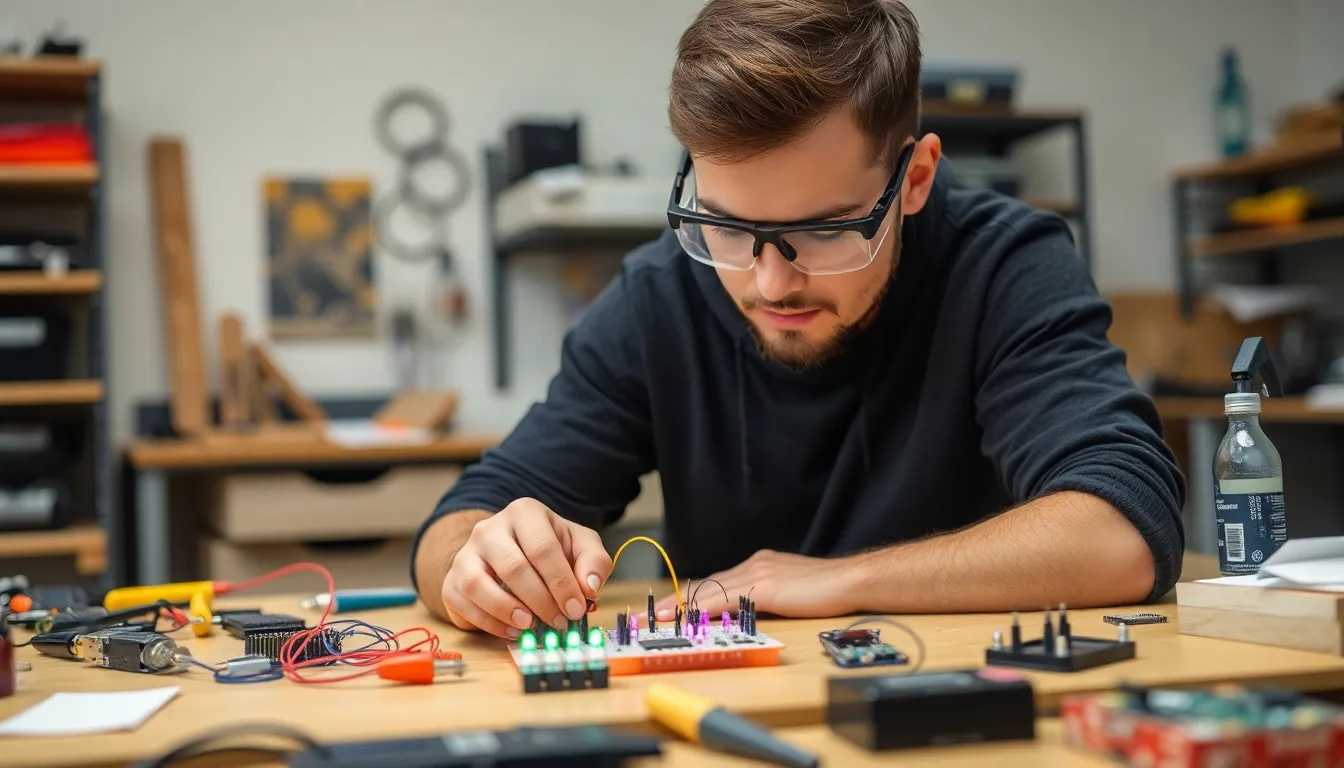
Exploring DIY electronics projects offers an engaging way to apply technical skills. Various projects cater to different skill levels, inspiring creativity and innovation.
Beginner-Friendly Projects
Simple circuit experiments stand out as beginner-friendly. Building a basic LED circuit allows one to understand essential components such as resistors and capacitors. Creating a mini flashlight requires basic soldering skills and helps grasp the concepts of power and circuitry. Additionally, constructing a basic sound generator introduces sound wave principles while being enjoyable. Others include making a simple alarm system, which enhances understanding of sensors and switches. These projects provide a great starting point to ignite interest in electronics.
Intermediate Level Projects
For those with some experience, connecting sensors to microcontrollers like Arduino can be exciting. Projects include building a weather station that measures temperature and humidity, offering hands-on programming experience. Another option is designing a smart LED display, which improves skills in coding and wiring. Creating a motion-sensing light not only teaches practical applications but also enhances understanding of motion detection technology. Such projects encourage experimentation with programming and sensor integration.
Advanced Projects
Advanced enthusiasts can tackle more complex systems. Constructing a home automation system enables the control of lights and appliances remotely, integrating multiple technologies. Developing a drone requires knowledge of motors, wiring, and flight control systems, making it a challenging but rewarding endeavor. Another engaging project is creating a digital oscilloscope, which deepens understanding of electronics through direct measurement of signals. These advanced projects refine technical abilities and provide substantial learning experiences in the field.
Resources for DIY Electronics Projects
Finding the right resources enhances the DIY electronics experience. Various platforms provide guidance, support, and inspiration for enthusiasts at all levels.
Online Communities and Forums
Online communities offer excellent support for DIY electronics enthusiasts. Engaging with others in forums like Reddit’s r/DIY or the EEVblog forum encourages sharing knowledge and troubleshooting. Members often post project ideas, ask questions, and offer solutions, making these spaces invaluable for both beginners and experts. Additionally, Facebook groups dedicated to electronics provide opportunities for real-time communication and group projects. These platforms connect users with similar interests and foster a collaborative environment.
Educational Websites and Tutorials
Numerous educational websites provide tutorials for diverse DIY electronics projects. Websites like Instructables and Adafruit host step-by-step guides that cater to various skill levels, making them accessible for all. Each tutorial often includes materials lists, diagrams, and troubleshooting tips, streamlining the learning process. YouTube channels also offer video tutorials, allowing visual learners to grasp complex concepts effectively. Websites like SparkFun and Make: Magazine regularly update their content, ensuring the latest trends and technologies remain visible to enthusiasts.
Tips for Successful DIY Electronics Projects
Successfully executing DIY electronics projects requires careful planning and attention to detail. Prioritizing organization and understanding both components and processes helps ensure effective project outcomes.
Troubleshooting Common Issues
Troubleshooting common issues significantly enhances project success. Start by checking power connections; loose or disconnected wires often lead to non-functioning circuits. Verify component orientation; placing components backward disrupts circuit functionality. Analyze your schematic diagram; mistakes in wiring can create unexpected behaviors. Document observations; keeping notes on any problems assists in refining future projects. Seek support from online communities; forums often contain solutions for many common issues faced by enthusiasts.
Best Practices for Circuit Design
Best practices in circuit design improve functionality and reliability. Use clear and concise schematics; organized layouts simplify understanding. Choose appropriate components; mismatched parts can lead to performance issues. Incorporate decoupling capacitors; these protect against voltage spikes. Implement proper grounding; a good ground connection helps prevent circuit malfunctions. Test prototypes using breadboards; this allows for modifications before finalizing designs.
Embarking on DIY electronics projects opens a world of creativity and innovation. Whether someone is a beginner or an advanced enthusiast there’s always a project that can spark interest and enhance skills. With the right tools and safety precautions in place anyone can enjoy the fulfilling experience of building and experimenting with electronics.
Utilizing online resources and communities can further enrich the journey providing support and inspiration. By approaching each project with careful planning and a willingness to learn individuals can not only create impressive gadgets but also deepen their understanding of technology. The possibilities are endless for those ready to dive into the exciting realm of DIY electronics.


