


Ever looked around your home and thought, “I could totally fix that”? Well, you’re not alone. Many beginners dive into DIY projects thinking they’ll just whip up a masterpiece, only to realize they’ve created a modern art installation instead. But fear not! DIY home projects for beginners are not only doable but can also be a fun way to unleash creativity and add a personal touch to any space.
Overview of DIY Home Projects for Beginners
Beginners often find DIY home projects to be both rewarding and challenging. Simple projects provide a tangible way to enhance living spaces without extensive skills or tools. Painting a room stands out as an ideal starting project, allowing individuals to experiment with colors and techniques.
Creating custom shelving invites creativity while addressing storage needs. Easy-to-follow plans exist for building shelves, making it approachable for novice builders. Assembling furniture from kits also offers a chance to engage in DIY without overwhelming complexities.
Engaging in gardening projects can inspire enjoyment and improve curb appeal. Container gardens and raised beds are manageable options that yield aesthetic and practical benefits.
Decorating with homemade art or crafts presents another enjoyable avenue. Projects such as wall hangings or painted canvases invite self-expression and add character to any room.
Updating fixtures, like light switches or cabinet handles, enhances a home’s look simply and effectively. These small changes can dramatically impact a space while requiring minimal tools.
Finding inspiration is easy with numerous resources available, including websites, video tutorials, and community workshops. DIY group classes often foster collaboration while teaching essential skills.
Budget-conscious individuals may appreciate that many DIY projects can be completed affordably. Utilizing salvaged materials or repurposing existing items reduces costs and promotes sustainability.
Each project not only beautifies a living space but also empowers beginners to take proud ownership of their homes. Through trial and error, they can explore their abilities and refine their skills in a practical and fulfilling way.
Essential Tools and Materials
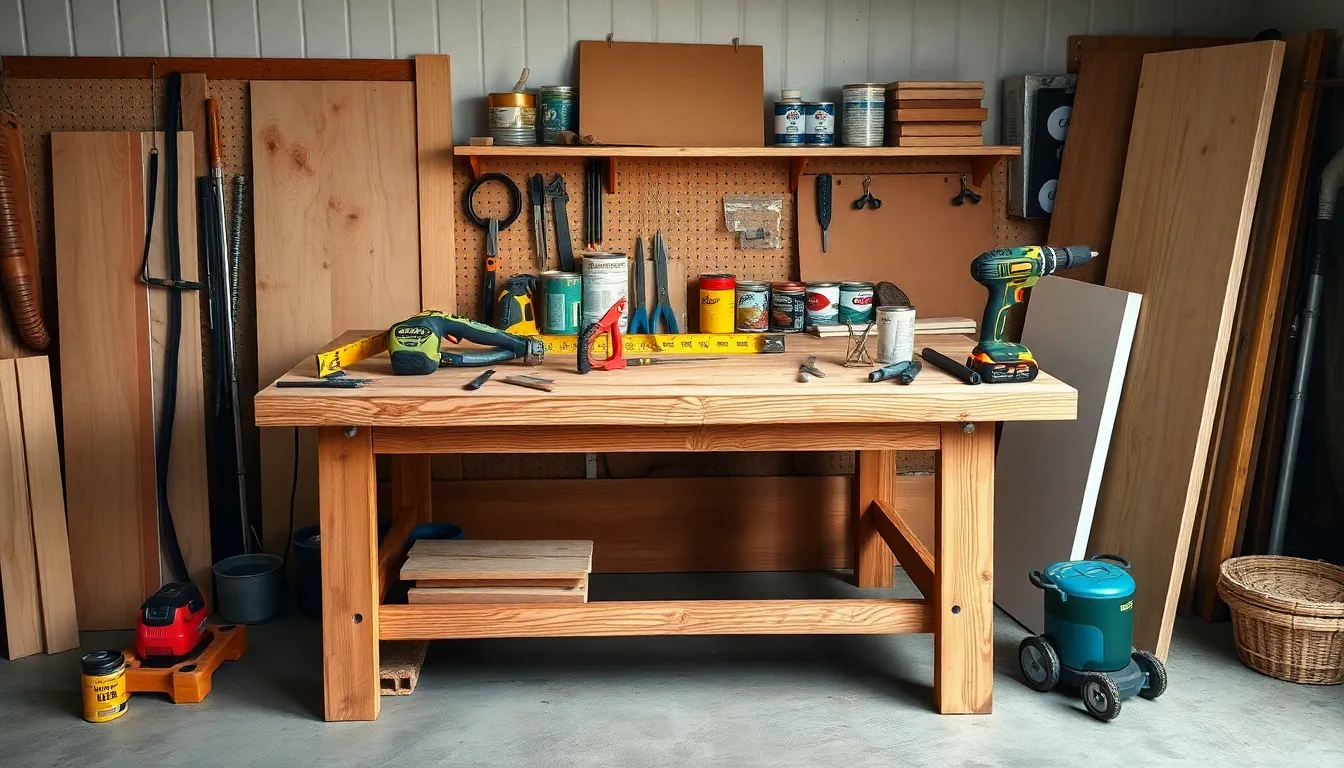
Equipping oneself with the right tools and materials helps streamline DIY home projects. Beginners should focus on essential items that enhance efficiency and effectiveness.
Basic Tools Every Beginner Should Have
Beginner DIYers need a few fundamental tools to ensure successful projects. A measuring tape proves critical for accurate measurements. A level helps achieve straight lines in various installations. Utility knives come in handy for cutting materials safely. A hammer plays an essential role in assembling or dismantling items. Screwdrivers, both flat-head and Phillips, are necessary for securing components. Pliers assist with gripping and bending wires. In addition, a cordless drill simplifies the process of drilling holes and driving screws. Having a work surface like a sturdy table enhances convenience during projects.
Recommended Materials for DIY Projects
Choosing the right materials significantly impacts project outcomes. Plywood serves as a versatile option for furniture and shelving. Paint, both colors and finishes, allows for creative expression in home decor. Wood screws offer strength for structural elements. Caulk ensures a proper seal in areas like windows and baseboards. Nails come in various sizes, suitable for different applications. Sandpaper helps achieve smooth surfaces on wooden items. In gardening projects, quality soil and seeds foster plant growth. Having a variety of fasteners guarantees flexibility for various DIY needs.
Simple DIY Home Projects
Engaging in simple DIY projects can be a fulfilling way to enhance living spaces. These projects offer beginners the chance to express creativity while developing practical skills.
Upcycling Old Furniture
Upcycling old furniture gives new life to pieces that might otherwise be discarded. A fresh coat of paint can completely transform a tired dresser or table. Adding new hardware, such as drawer knobs or handles, brings a modern touch. Applying wallpaper or fabric to the surfaces creates unique designs. Moreover, these alterations can make a statement in any room. Upcycled furniture often features a personal story, adding character to home decor. Beginners can explore tutorials focusing on specific techniques and materials for the best results.
Creating Wall Art
Creating wall art allows individuals to personalize their spaces economically. Simple canvas paintings serve as a great starting point for artistic expression. Beginners can also use stencils and spray paint to craft eye-catching designs. Incorporating natural elements like pressed flowers or leaves lends a unique touch to the artwork. Additionally, framing fabric or colorful paper can result in bold display pieces. DIY wall art enables personalization and enhances the atmosphere of any room. A wide range of online resources provide inspiration and step-by-step guidance for successful projects.
Room-Specific DIY Ideas
Exploring room-specific DIY projects helps beginners personalize their spaces while gaining essential skills.
DIY Projects for the Living Room
Transform furniture with paint or stain to create a fresh look. Adding a gallery wall with personal photos or art enhances visual appeal. Make custom throw pillows with fabric and sewing supplies for added comfort. Shelves can be built from reclaimed wood to showcase books or decor items. Consider updating lighting fixtures for a modern touch, giving the space an inviting atmosphere. Engage in simple craft projects like creating decorative lanterns or candle holders for ambience.
DIY Projects for the Kitchen
Install open shelving to display dishware and add character. Painting cabinets bright colors refreshing the kitchen without a full remodel. A backsplash made from peel-and-stick tiles offers an easy decorative upgrade. Create a herb garden on a windowsill for both beauty and practicality. Distressed wooden crates serve as unique storage solutions for vegetables or pantry items. Consider making a chalkboard wall for notes and menus, enhancing functionality and style. Engage in organizing projects by customizing drawer dividers to maximize space efficiently.
Safety Tips for DIY Beginners
Safety is paramount when engaging in DIY projects, especially for beginners. Always wear protective gear such as safety goggles, gloves, and masks to prevent injuries. Use tools carefully; for instance, always operate power tools according to manufacturer instructions to avoid accidents.
Stay aware of your surroundings. Ensure the workspace is clutter-free to minimize tripping hazards. Keep children and pets away from the project area when working, reducing the risk of injury.
Read labels and safety data sheets for materials and chemicals before use. Understanding the risks associated with products like paints, adhesives, or cleaners enhances safety. Store materials in a well-ventilated space to avoid harmful fumes.
Employ proper lifting techniques when moving heavy materials. Bend at the knees and keep your back straight to prevent strains. For bigger projects, consider enlisting a friend to help, making the task more manageable and safer.
Maintain tools regularly to keep them in good condition. Dull blades can lead to accidents, so replace or sharpen them as needed. Clean tools after use to prevent buildup, ensuring they’re ready for the next project.
Finally, trust your instincts. If a project feels overwhelming or unsafe, take a break. Seeking guidance from experienced DIYers or local workshops can provide invaluable insights. Implementing these safety measures ensures a positive and successful DIY experience for beginners.
Embarking on DIY home projects opens up a world of creativity and personal expression. With the right tools and a bit of guidance beginners can transform their living spaces into unique reflections of their style. Each project not only enhances the home but also builds confidence and skills that can be applied to future endeavors.
The journey of DIY is filled with learning opportunities and the satisfaction of seeing one’s vision come to life. By starting with simple projects and utilizing available resources beginners can enjoy a fulfilling experience that encourages ongoing exploration and creativity. Embracing the DIY spirit can lead to a beautifully personalized home and a sense of accomplishment that lasts long after the tools are put away.


